
C. Auguste Dupin Books in Order
Part ofEdgar Allan Poe Books in OrderSee the C. Auguste Dupin stories by Edgar Allan Poe in order, with brief summaries, reading order, series background, and tips on where to start.
Last updated:
As an Amazon Associate, we earn from qualifying purchases (at no extra cost to you).
C. Auguste Dupin books in publication order
3 books
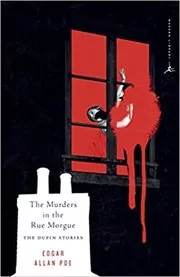
The Murders in the Rue Morgue
by Edgar Allan Poe
1841
Chevalier C. Auguste Dupin solves a brutal Paris murder that has baffled the police, and in the process Poe sketches the first modern detective story.
The Mystery of Marie Roget
by Edgar Allan Poe
1842
Dupin takes on the death of a young Parisian woman and works largely from newspapers and inference, making this one of Poe's most analytical mysteries.
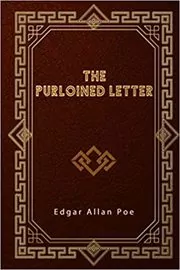
The Purloined Letter
by Edgar Allan Poe
1844
A stolen letter gives its holder dangerous leverage, and Dupin shows that the cleverest concealment may be the most obvious one.
C. Auguste Dupin books in chronological order
Series background & context
C. Auguste Dupin is the model for countless detectives who came later, but these stories do not feel like modern police procedurals. They are compact, clever tales in which a Parisian amateur solves problems that leave the official investigators stuck. What matters most is not action or chase scenes, but the thrill of seeing how Dupin thinks.
Dupin lives in Paris and usually appears with an unnamed narrator who admires him, follows his reasoning, and helps frame the mystery for the reader. That pairing became a template for the genre. Dupin is bookish, calm under pressure, and deeply interested in analysis, the habit of noticing small details and fitting them together in a way other people miss. He is not a policeman. He is an observer with a powerful mind and a taste for difficult problems.
The Murders in the Rue Morgue is the place to start. It opens with a locked-room crime so violent and bizarre that the police cannot make sense of it. Dupin studies the scene, separates useful facts from noise, and works toward an answer the authorities never imagine. The story is famous for its solution, but the larger pleasure is watching Poe build the basic detective pattern that later writers would use again and again.
That method is the real series hook.
The Mystery of Marie Roget takes a different path. Instead of dramatic scenes and physical clues, much of the case unfolds through reports, rumor, and public speculation around a young woman's death. It is slower and more analytical, almost like reading a case file with Dupin leaning over your shoulder. If you like mysteries built from inference rather than action, this is the most purely deductive entry in the set.
The Purloined Letter is smaller in scale but just as sharp. The missing object is a stolen letter, and the stakes are political rather than bloody. What makes the story memorable is its central idea, that the smartest hiding place may be the one nobody takes seriously because it is too visible. Poe turns a simple premise into a sly contest between official procedure and imaginative intelligence.
Paris matters across all three stories. It gives the series crowded streets, private apartments, newspapers, police bureaucracy, and the sense that modern city life produces both confusion and clues. There is not much continuing personal drama from story to story, so readers can move straight through them in order and watch Poe refine the form. If you like locked rooms, armchair sleuths, brilliant explanations, and mysteries built on thought rather than force, the Dupin stories still feel fresh.









Edited by
Software engineer whose passion for tracking book recommendations from podcasts inspired the creation of MRB.
Lead investor at 3one4 Capital whose startup expertise and love for books helped shape MRB and its growth.
Comments
Did we miss something? Have feedback?
Help us improve this page by sharing your thoughts