
Bruce Sterling (William Gibson) Books in Order
Part ofWilliam Gibson Books in OrderSee collaborations between Bruce Sterling and William Gibson in order, with summaries, notes on The Difference Engine, and background on how their styles meet in cyberpunk and steampunk.
Last updated: June 7, 2026
As an Amazon Associate, we earn from qualifying purchases (at no extra cost to you).
Bruce Sterling (William Gibson) books in publication order
1 book
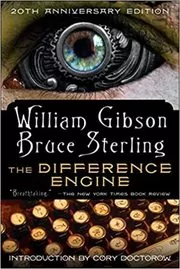
The Difference Engine
by William Gibson
1990
In an alternate 1850s Britain where Charles Babbage’s mechanical computers have reshaped society, radicals, scientists, and spies chase a cryptic set of punch cards that could shift the balance of power. Steam, early networks, and political intrigue combine in a landmark steampunk novel.
Series background & context
This section highlights the direct collaborations between William Gibson and Bruce Sterling, most notably their novel The Difference Engine. It’s where two founding figures of cyberpunk ask what happens if the computer age starts a century and a half early.
The Difference Engine takes place in an alternate 1850s Britain where Charles Babbage’s mechanical engines actually work and have spread through government and industry. Steam‑driven computation underpins new bureaucracies, surveillance systems, and markets, and the familiar Victorian world tilts toward something stranger.
Instead of console cowboys in cyberspace, you meet figures like Sybil Gerard, daughter of an executed Luddite; paleontologist Edward Mallory; and a web of politicians, revolutionaries, and spies. Much of the plot turns on a set of mysterious punch cards and the question of who controls the information encoded on them.
You can feel both authors at work. Gibson brings his eye for textured streets, improvised subcultures, and the way people inhabit technology without fully understanding it. Sterling brings a taste for political machinery, economic games, and the idea that history itself can be hacked.
The result reads like a bridge between cyberpunk and what later came to be called steampunk: coal smoke, computing engines, and class conflict sharing the same pages. It’s dense, playful, and interested in the unintended consequences of innovation rather than in simple heroic breakthroughs.
If you’ve read their separate work, this collaboration offers a chance to spot the joins and overlaps—seeing how two different sensibilities can build a single alternate timeline that still speaks to questions about data, power, and surveillance in the present.











Edited by
Software engineer whose passion for tracking book recommendations from podcasts inspired the creation of MRB.
Lead investor at 3one4 Capital whose startup expertise and love for books helped shaped MRB and its growth.
Comments
Did we miss something? Have feedback?
Help us improve this page by sharing your thoughts