
Bridge Trilogy Books in Order
Part ofWilliam Gibson Books in OrderThis page lists William Gibson's Bridge trilogy in order, with summaries, Bay Bridge setting background, and guidance on reading Virtual Light, Idoru, and All Tomorrow's Parties.
Last updated:
As an Amazon Associate, we earn from qualifying purchases (at no extra cost to you).
Bridge Trilogy books in publication order
3 books
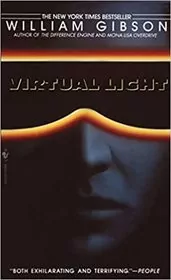
Virtual Light
by William Gibson
1993
In fractured near-future California, bike courier Chevette Washington impulsively steals a pair of high-tech sunglasses from a party guest. The glasses hide sensitive plans for remaking San Francisco, putting Chevette and down-on-his-luck ex-cop Berry Rydell on the run through the Bay Bridge community.
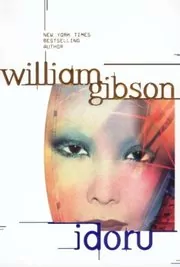
Idoru
by William Gibson
1996
Data analyst Colin Laney is hired to investigate why rock star Rez plans to marry Rei Toei, a virtual pop idol. At the same time, teen fan Chia McKenzie is sent to Tokyo, stumbling into nanotech smuggling and media manipulation around the mysterious idoru.
Recommended by
2 people Jason Calacanis recommended this book
Jason Calacanis
"I love [this book]." - Jason Calacanis
Jason Calacanis's recommendation of this book  Adam Sessler recommended this book
Adam Sessler
Adam Sessler recommended this book on Twitter.
Adam Sessler's recommendation of this book
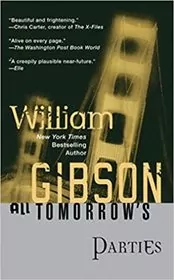
All Tomorrow's Parties
by William Gibson
1999
On a shantytown built along the Bay Bridge, drifter Berry Rydell, ex-messenger Chevette Washington, and a mysterious assassin converge on a coming nodal point in history. As nanotechnology, media empires, and street-level hustlers collide, the future threatens to pivot around the bridge.
Bridge Trilogy books in chronological order
Series background & context
The Bridge trilogy sits between Gibson’s early cyberpunk and his later present‑day work. The books—Virtual Light, Idoru, and All Tomorrow's Parties—share characters, a battered near‑future setting, and a fascination with what people build in the gaps left by official systems.
The name comes from the San Francisco‑Oakland Bay Bridge, which in this timeline was closed after a major earthquake and slowly colonised by squatters. Over the years it turns into a vertical shantytown, layered with shops, clinics, and homes—a self‑organising city hanging above the water.
In Virtual Light, bike messenger Chevette Washington lives on the Bridge and looks after a cantankerous old man named Skinner. One night she lifts a pair of unusual sunglasses from a party guest on a whim. The glasses turn out to carry sensitive data tied to a plan to remake San Francisco with nanotechnology, drawing Chevette together with ex‑cop Berry Rydell and a mix of bounty hunters, corporate fixers, and street kids.
Idoru shifts much of the action to Tokyo. Colin Laney, a damaged data researcher who can spot 'nodal points' in vast streams of information, is hired to find out why rock star Rez wants to marry Rei Toei, a digital pop idol. At the same time, teenage fan Chia McKenzie is sent by a Lo/Rez fan club to investigate the same rumour, only to stumble into smuggling schemes and ruthless media players.
All Tomorrow's Parties pulls many of these characters back to the Bridge, where Laney becomes convinced that another historical nodal point is forming. Rydell drifts into town on a small job, Chevette returns to old ground, and an unnervingly calm assassin named Konrad moves through the story with his own agenda. Corporate interests, emergent technologies, and improvised communities collide on the Bridge as the world edges toward a subtle kind of change.
Across the trilogy, Gibson trades some of the pure virtuality of the Sprawl books for a stronger sense of place. You get long looks at street markets, cheap apartments, and hacked‑together devices. Technology is still strange—virtual idols, nanotech construction, data‑sifting savants—but it’s braided through everyday lives rather than cordoned off in cyberspace.
If you like stories about cities in flux, improvised neighbourhoods, and characters trying to read the weather of change, the Bridge books make a vivid, self‑contained slice of Gibson’s future.






Edited by
Software engineer whose passion for tracking book recommendations from podcasts inspired the creation of MRB.
Lead investor at 3one4 Capital whose startup expertise and love for books helped shape MRB and its growth.
Comments
Did we miss something? Have feedback?
Help us improve this page by sharing your thoughts