
Bill Watterson Books in Order
Explore Bill Watterson's books in order, with Calvin and Hobbes collections, quick summaries, series background and clear guidance on where to start reading.
Last updated:
As an Amazon Associate, we earn from qualifying purchases (at no extra cost to you).
Bill Watterson books in publication order
21 books
Calvin and Hobbes
by Bill Watterson
1987
The first Calvin and Hobbes collection introduces Calvin, a restless six year old, and Hobbes, his supposedly stuffed but very opinionated tiger. Early strips show them battling monsters under the bed, feuding with parents and neighbors, and turning cardboard boxes into wild adventures.
Something Under the Bed is Drooling
by Bill Watterson
1988
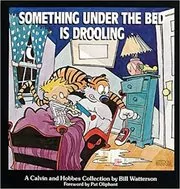
Calvin is sure something under his bed is out to get him, and Hobbes is happy to play along. This collection leans into night terrors, mutant snowmen, cardboard time machines and run-ins with babysitter Rosalyn, blending big laughs with surprisingly thoughtful moments.
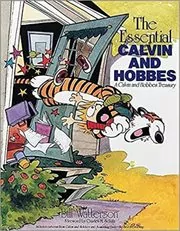
The Essential Calvin and Hobbes
by Bill Watterson
1988
Combining the first two Calvin and Hobbes books with extra color Sunday pages and new material, this oversized treasury is a great one-volume introduction. It highlights Calvin's early monster hunts, snow battles and philosophical chats with Hobbes in one generous sampler.
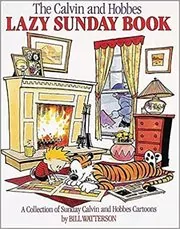
The Calvin and Hobbes Lazy Sunday Book
by Bill Watterson
1989
This big, colorful volume collects Calvin and Hobbes Sunday strips from the late eighties, when Watterson began stretching his layouts and painting lush scenes. Expect sprawling Spaceman Spiff sequences, elaborate snowmen and a long painted adventure created just for the book.
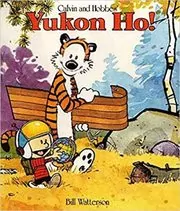
Yukon Ho!
by Bill Watterson
1989
In Yukon Ho!, Calvin dreams of running away to the wilderness, dragging Hobbes and his long-suffering parents into camping disasters and backyard explorations. The strips feature early transmogrifier experiments, school troubles and snowy battles that turn ordinary days into epic expeditions.
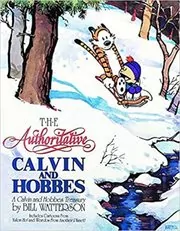
The Authoritative Calvin and Hobbes
by Bill Watterson
1990
This treasury gathers all the strips from Yukon Ho! and Weirdos from Another Planet! in a larger format, with color Sundays and a new story. It spotlights Calvin's wilderness escapades, space flights and first experiments with gadgets like the duplicator and transmogrifier.
Weirdos from Another Planet!
by Bill Watterson
1990
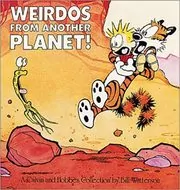
Calvin copes with school, chores and neighbor Susie by blasting off as Spaceman Spiff or founding the kids-only club GROSS. Weirdos from Another Planet! is packed with interstellar daydreams, desert island fantasies and outdoor mischief that show off the strip's growing ambition.
Scientific Progress Goes
by Bill Watterson
1991
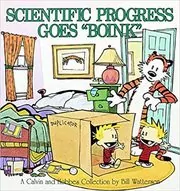
This collection centers on Calvin's homemade gadgets, especially the notorious duplicator that fills the house with extra Calvins. Scientific Progress Goes Boink follows his science projects, snow fort campaigns and late-night debates with Hobbes about what happens when experiments spiral out of control.
The Revenge of the Baby-Sat
by Bill Watterson
1991
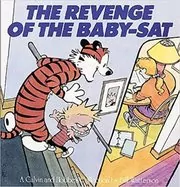
In The Revenge of the Baby-Sat, Calvin wages all-out war on his formidable babysitter, Rosalyn, while also battling homework, bath time and school. Stupendous Man debuts, Calvinball gets wilder, and Hobbes tries to keep a straight face through the chaos.
Attack of the Deranged Mutant Killer Monster Snow Goons
by Bill Watterson
1992
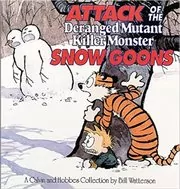
Calvin's snowmen stage a full-scale uprising in Attack of the Deranged Mutant Killer Monster Snow Goons. Between sinister snow sculptures, wild sled rides, more gadget mishaps and clashes with Rosalyn, this book captures the strip at its frostbitten, fast-paced, inventive best.
The Indispensable Calvin and Hobbes
by Bill Watterson
1992
The Indispensable Calvin and Hobbes is a large treasury that reprints The Revenge of the Baby-Sat and Scientific Progress Goes Boink with color Sundays and extra pages. It showcases some of the strip's most famous snow battles, gadget gags and playful poems.
The Days Are Just Packed
by Bill Watterson
1993
Long, lazy days turn out to be anything but in The Days Are Just Packed. Calvin and Hobbes race through summer vacations, camping trips, backyard explorations and high-stakes Calvinball matches, pausing just often enough for stargazing and small, surprisingly tender conversations.
Homicidal Psycho Jungle Cat
by Bill Watterson
1994
Homicidal Psycho Jungle Cat finds Calvin a little older but no less intense, staging snowball wars, elaborate pranks on Susie and tangled family outings. Watterson pushes the art and layouts here, pairing slapstick set pieces with sharper social satire and reflective quiet strips.
The Calvin and Hobbes Tenth Anniversary Book
by Bill Watterson
1995
Part retrospective, part scrapbook, The Calvin and Hobbes Tenth Anniversary Book mixes landmark strips with Watterson's own commentary about how and why he made them. It is the best place to hear the creator talk directly about his characters, craft and decisions.
It's a Magical World
by Bill Watterson
1996
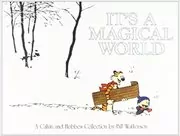
It's a Magical World gathers the final year of Calvin and Hobbes, including the beloved closing sled sequence. The tone swings between pure goofiness and bittersweet reflection as Calvinball, snowmen and family camping trips give the strip a graceful, open-ended goodbye.
There's Treasure Everywhere
by Bill Watterson
1996
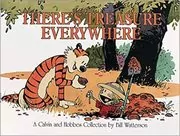
There's Treasure Everywhere treats childhood as one long treasure hunt, whether Calvin is digging in the yard, scheming to get rich fast or turning a cardboard box into something impossible. Hobbes keeps pace with dry humor as snowball fights, pranks and big questions pile up.
Calvin and Hobbes: Sunday Pages, 1985-1995
by Bill Watterson
2001
This art-focused volume selects a decade of Calvin and Hobbes Sunday pages and prints them large, in full color. Alongside the strips, Watterson offers notes on composition, timing and experimentation, giving fans a rare look at how he built those expansive weekly adventures.
The Complete Calvin and Hobbes
by Bill Watterson
2005
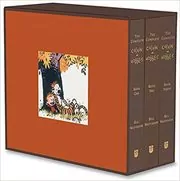
This deluxe collection gathers every Calvin and Hobbes strip from the entire ten-year run in one set, including both daily and Sunday pages. It's the easiest way to follow Calvin and Hobbes from the first snowball to the final sled ride.
Recommended by
1 person Paul Graham recommended this book
Paul Graham
"Watterson is like Wodehouse. Because he works in an unpretentious medium, few realize how timelessly great he is." - Paul Graham
Paul Graham's recommendation of this book
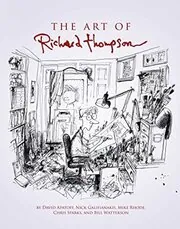
The Art of Richard Thompson
by Bill Watterson
2014
This book is a career-spanning tribute to cartoonist Richard Thompson, gathering his illustrations, caricatures and Cul de Sac strips. Watterson joins other friends and colleagues in introducing the work, offering thoughtful context rather than center stage for himself.
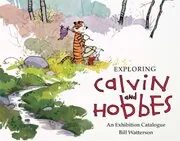
Exploring Calvin and Hobbes
by Bill Watterson
2015
Created to accompany a museum exhibition, Exploring Calvin and Hobbes collects original art, sketches and full-color strips along with a long interview with Watterson. It digs into his influences, working process and feelings about the strip in a way the comics alone never could.

The Mysteries
by Bill Watterson
2023
The Mysteries is a short, eerie fable about a kingdom plagued by inexplicable forces and the knight sent to confront them. Watterson and artist John Kascht build a dark, atmospheric world in moody black and white, leaving readers with more questions than answers.
Where to start with Bill Watterson
If you want to follow the strip from the beginning: Calvin and Hobbes → Something Under the Bed is Drooling → Yukon Ho!
If you prefer a single big sampler: The Essential Calvin and Hobbes → The Days Are Just Packed
If you want the whole story in one set: The Complete Calvin and Hobbes
If you love process and commentary: The Calvin and Hobbes Tenth Anniversary Book → Exploring Calvin and Hobbes → Calvin and Hobbes: Sunday Pages, 1985-1995
If you’re curious about Watterson’s newest work: The Mysteries
Bill Watterson sub-series and character series
Calvin and Hobbes books in order
Explore this series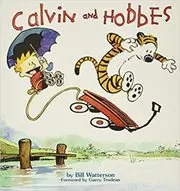
Attack of the Deranged Mutant Killer Monster Snow Goons
by Bill Watterson
1992Calvin and Hobbes, Book 10

Calvin and Hobbes books in chronological order
Attack of the Deranged Mutant Killer Monster Snow Goons
by Bill Watterson
1992Calvin and Hobbes, Book 10
Bill Watterson collections, short stories, and related book types
Non-Fiction
Standalone Bill Watterson books
Author bio
Bill Watterson is the cartoonist behind Calvin and Hobbes, the comic strip about a six-year-old boy and his tiger that ran in newspapers from 1985 to 1995. During that decade he turned a two-panel gag into a sprawling, imaginative world that mixed slapstick with philosophy. The strip made him one of the most widely read cartoonists of his time.
He was born William Boyd Watterson II on July 5, 1958, in Washington, D.C., and moved with his family to the small town of Chagrin Falls, Ohio, when he was six. His father worked as a patent attorney, his mother served on the local council, and Watterson spent long stretches of childhood drawing cartoons instead of doing much else. The suburban Ohio landscape he grew up in later became the backdrop for Calvin's neighborhood adventures.
As a kid he devoured newspaper strips such as Peanuts, Pogo, and Krazy Kat, which showed him how much could be done with simple drawings and spare dialogue. In high school he drew for the student paper; at Kenyon College in Ohio he majored in political science but really poured his energy into editorial cartoons for the campus newspaper. At one point he even painted Michelangelo's Creation of Adam on his dorm-room ceiling, a story he later used in a graduation speech to talk about working hard on things that matter to you.
After graduating in 1980, Watterson landed a trial job as a political cartoonist at the Cincinnati Post and lost it within a few months, partly because he wasn't steeped in local politics. He spent several years working for a small advertising agency, designing grocery ads by day and sending comic-strip pitches to syndicates at night. One rejected strip about a boy and his stuffed tiger eventually evolved into Calvin and Hobbes, which Universal Press Syndicate picked up for nationwide distribution in 1985.
The finished strip followed Calvin, an overtalkative, overthinking six-year-old, and Hobbes, a tiger who is a stuffed toy to everyone else but fully alive when they're alone. Set in a generic Midwestern suburb, it used snow forts, cardboard-box inventions, schoolyard feuds and endless walks in the woods as excuses to poke at big ideas about nature, consumer culture and growing up. Watterson's linework and layouts drew on the cartooning he admired as a child, but he pushed the Sunday pages in particular toward more daring, poster-like compositions.
The response was immediate. Within a few years the strip ran in thousands of papers around the world, and Watterson won the National Cartoonists Society's Reuben Award twice while still in his thirties. At the same time he fought hard against licensing Calvin and Hobbes for toys, T‑shirts or animation, arguing that turning his characters into products would flatten the ambiguity and warmth that made them feel real in the first place.
The pressure of the schedule and of that long battle over merchandising led him to negotiate two sabbaticals from the strip, an almost unheard‑of arrangement in syndicated comics. In late 1995 he chose to end Calvin and Hobbes on his own terms, telling readers he'd done all he could in that format and wanted room to work more slowly and privately. Since then he has largely stepped away from public life, declining most interviews and appearances and letting the books carry the strip's legacy.
After the strip ended, Watterson turned toward painting and other personal projects while living quietly in the Cleveland area with his wife, Melissa, and their daughter. Now and then he has surfaced for work that mattered to him: a review and tribute pieces about his hero Charles Schulz, a poster for the cartooning documentary Stripped, guest artwork on the strip Pearls Before Swine, and a co‑edited art book celebrating his friend and fellow cartoonist Richard Thompson. These side projects tend to orbit around other artists he admires and causes he cares about, rather than building a new public persona.
In 2023 he surprised readers with The Mysteries, a dark, fable‑like picture book for adults created in close collaboration with caricaturist John Kascht. The book trades the loose ink lines of Calvin and Hobbes for moody, mixed‑media images, but it keeps his fascination with uncertainty, fear and the limits of what people can control. Taken together, his work still feels like an argument for curiosity and play, even when the artist himself prefers to stay offstage.









Edited by
Software engineer whose passion for tracking book recommendations from podcasts inspired the creation of MRB.
Lead investor at 3one4 Capital whose startup expertise and love for books helped shape MRB and its growth.
Comments
Did we miss something? Have feedback?
Help us improve this page by sharing your thoughts