
Belgian Congo Mystery Books in Order
Part ofTamar Myers Books in OrderThis page shows the Belgian Congo Mystery books by Tamar Myers in order, with brief summaries, series background, and clear where-to-start guidance.
Last updated:
As an Amazon Associate, we earn from qualifying purchases (at no extra cost to you).
Belgian Congo Mystery books in publication order
4 books
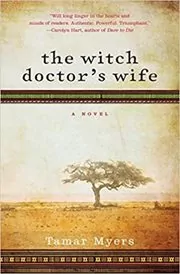
The Witch Doctor's Wife
by Tamar Myers
2009
In 1958, young missionary Amanda Brown arrives in the Congo eager to do good and quickly runs into greed, culture clash, and danger. A giant uncut diamond and a murder plot pull her deep into the lives of Belle Vue's residents.
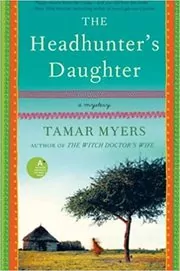
The Headhunter's Daughter
by Tamar Myers
2011
A white girl raised by the Bashilele headhunters is discovered and brought toward the world she was born into but no longer understands. Amanda Brown and her allies uncover buried secrets as a kidnapping plot flares back to life.
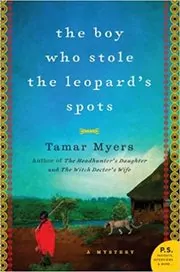
The Boy Who Stole the Leopard's Spots
by Tamar Myers
2012
An accused monsignor, an old crime, and a dangerous secret shake Belle Vue in 1950s Congo. Amanda Brown, a police chief, and a witch doctor's family must work together to clear his name before the truth destroys more lives.
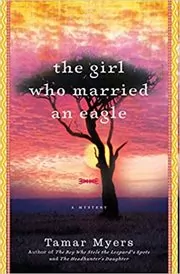
The Girl Who Married an Eagle
by Tamar Myers
2013
Julia Newton leaves Ohio for a mission school in the Belgian Congo and meets Buakane, a young girl fleeing an arranged marriage to Chief Eagle. Their lives collide in a tense story of survival, faith, and freedom.
Belgian Congo Mystery books in chronological order
Series background & context
The Belgian Congo Mystery books are very different from Tamar Myers's cozies, even though they share her eye for community, conflict, and stubborn people. These novels are set in the Belgian Congo of the 1950s, in the tense years before independence, and they draw heavily on the world Myers knew as a child. The result is a series that feels larger, riskier, and more historical than the Magdalena Yoder or Abigail Timberlake books. Murder matters here, but so do politics, missionary life, race, fear, and the pressure of a country on the verge of change.
The first book, The Witch Doctor's Wife, introduces young missionary Amanda Brown and the mining town of Belle Vue. From there the series opens outward to include figures like Captain Pierre Jardin, the quick-witted Cripple, and Their Death, the witch doctor whose family becomes part of the moral center of the books. These recurring characters help tie the series together, but the larger bond is the setting itself. Each novel explores how different worlds collide in the Congo, and how those collisions can turn personal, dangerous, and sometimes deadly.
These books have more danger in them.
That does not mean they are grim all the way through. Myers still writes with humor and a feel for odd human behavior. But the stakes are higher and less tidy. Forced marriage, colonial exploitation, missionary ambition, diamond greed, tribal custom, superstition, kidnapping, and old violence all shape the plots. In The Headhunter's Daughter, a white girl raised among the Bashilele becomes the center of a painful struggle over belonging. In The Boy Who Stole the Leopard's Spots, buried secrets and religious shame drive the mystery. In The Girl Who Married an Eagle, the story widens to include a mission school for girls fleeing arranged marriages.
The setting is not a backdrop. It is the engine of the series. Rivers, forests, mission stations, isolated roads, mining towns, and village life all shape what characters can do and what they can survive. So do the rules imposed by colonial power and by local custom. Myers is especially interested in people caught between systems, missionaries who mean well and still fail to understand, Africans forced to navigate European authority, and women trying to hold on to some measure of choice in places built to deny it.
That is what gives these books their real pull. They are mysteries, yes, but they are also novels about divided loyalties and cultural misunderstanding. Amanda Brown is an important thread, though not the only one, and the books are often less about one detective solving one case than about several lives converging around a crime. The clues matter, but so does the question of who gets heard, who gets protected, and who pays when larger powers collide.
If you are coming to these books from Myers's lighter series, expect a shift in tone. The humor is still there, but the historical texture is thicker and the danger feels more immediate. Read them in order if you can. Each book stands on its own, but together they build a vivid picture of a place Myers knew from the inside, and they show another side of what she could do as a writer.








Edited by
Software engineer whose passion for tracking book recommendations from podcasts inspired the creation of MRB.
Lead investor at 3one4 Capital whose startup expertise and love for books helped shape MRB and its growth.
Comments
Did we miss something? Have feedback?
Help us improve this page by sharing your thoughts