
Barry Lancet Books in Order
Explore Barry Lancet books in order, with Jim Brodie summaries, series notes, author background, and a quick guide to where to start reading.
Last updated:
As an Amazon Associate, we earn from qualifying purchases (at no extra cost to you).
Barry Lancet books in publication order
4 books
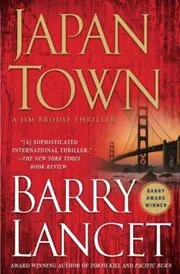
Japantown
by Barry Lancet
2013
After a family is massacred in San Francisco's Japantown, antiques dealer and part-time investigator Jim Brodie is asked to interpret a single bloody clue. The case soon connects to his wife's death and puts his young daughter in danger.
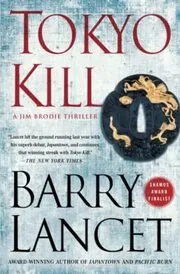
Tokyo Kill
by Barry Lancet
2014
Back in Tokyo, Jim Brodie agrees to protect an elderly World War II veteran who fears someone is hunting the last survivors of an old mission. A brutal murder pulls Brodie into hidden treasure, Triads, and dangerous wartime secrets.
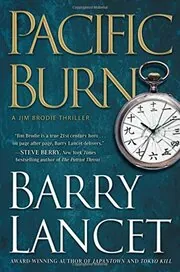
Pacific Burn
by Barry Lancet
2016
After a sniper attacks Jim Brodie and artist Ken Nobuki outside San Francisco City Hall, Brodie suspects someone is picking off Nobuki's family. The search leads from California to Japan, toward a legendary killer and a much larger conspiracy.
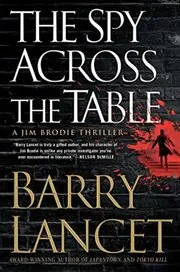
The Spy Across the Table
by Barry Lancet
2017
When two of Jim Brodie's friends are murdered backstage at the Kennedy Center, his hunt for the killer turns into an espionage chase across Washington, Tokyo, and beyond. A kidnapping tied to a secret NSA program raises the stakes fast.
Where to start with Barry Lancet
If you want the true starting point: Japantown → Tokyo Kill
If you want wartime secrets and Tokyo intrigue: Tokyo Kill → Pacific Burn
If you want the biggest cross-Pacific stakes: Pacific Burn → The Spy Across the Table
If you want a later standalone-style entry first: The Spy Across the Table → Japantown
Barry Lancet sub-series and character series
Author bio
Barry Lancet was born in Cincinnati and later spent important years in California before Japan changed the direction of his adult life. He is an American thriller writer, but he is also a long-time resident of Tokyo, and that double perspective runs through his work. His novels move fast, yet they are grounded in places, objects, and habits he has known up close for decades.
From a young age, he wanted to live overseas for a while. London and Paris first caught his eye because of their publishing worlds, but a visit to Japan stayed with him more strongly than he expected. He finished his last year of college in the United States, went back to Japan five years later, and ended up building a life there.
In Tokyo he spent about twenty-five years at Kodansha International, working in English-language publishing. He edited and developed books on Japanese art, craft, cuisine, history, Zen, philosophy, and other subjects, and that long apprenticeship gave him deep access to corners of Japanese culture that most outsiders only glimpse. It also taught him how to explain complicated material clearly, which became one of the quiet strengths of his fiction.
This was also the period when he started thinking harder about writing novels. He had grown up reading widely, and after years of handling dense manuscripts by day, he found himself pulled toward mysteries and thrillers as a reader. He began to see that a tightly built thriller could carry character, ideas, and atmosphere just as surely as more literary work.
A turning point came from real life. Early in his years back in Japan, he was summoned to a police station over a minor visa problem and subjected to a long, tense interview. The details were less important than the feeling, the imbalance of power, the psychological pressure, the way a room can change when one side knows more than the other, and that experience fed directly into the world he would later build on the page.
He wrote Japantown the slow way.
For years he worked on it around a demanding job, making use of train rides, weekends, and scraps of quiet time. When his publishing career finally ended, he had the chance to give the manuscript a full push. The book went on to win the Barry Award for Best First Novel and introduced Jim Brodie, the bilingual art dealer and investigator who became the center of Lancet's fiction.
He followed with Tokyo Kill, Pacific Burn, and The Spy Across the Table. Together those books show what readers come to Barry Lancet for: cross-Pacific suspense, cases that open into larger conspiracies, and a strong feel for the way art, history, politics, and crime can overlap. He likes the dark side of a thriller, but he also makes room for beauty, whether that means ceramics, ink paintings, old neighborhoods, or the quiet force of something well made.
Art matters to him for personal reasons too. He has spoken about growing up around it, with a grandfather who worked in wood and a brother who became an artist. That helps explain why his books are interested not only in danger, but in the tension between beauty and violence, calm surfaces and hidden damage.
He still writes from Japan.
He has said he speaks Japanese, travels to the United States often, and is most interested in what lies a few layers below the obvious version of a place. That is a good way to describe the appeal of his novels as well. They are thrillers, yes, but they are also guided tours through worlds that feel lived in rather than borrowed.








Edited by
Software engineer whose passion for tracking book recommendations from podcasts inspired the creation of MRB.
Lead investor at 3one4 Capital whose startup expertise and love for books helped shape MRB and its growth.
Comments
Did we miss something? Have feedback?
Help us improve this page by sharing your thoughts