
Avi Loeb Books in Order
Browse Avi Loeb books in order, with quick summaries, background on his science writing, and tips on whether to start with Extraterrestrial or Interstellar.
Last updated:
As an Amazon Associate, we earn from qualifying purchases (at no extra cost to you).
Avi Loeb books in publication order
2 books
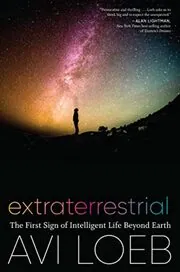
Extraterrestrial
by Avi Loeb
2021
After the interstellar object Oumuamua passes through the solar system, Loeb argues its strange behavior may point to alien technology. He uses the mystery to make a larger case for open-minded science, careful evidence, and a wider search for life beyond Earth.
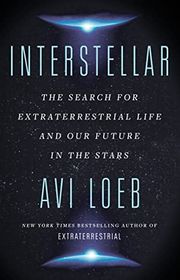
Interstellar
by Avi Loeb
2023
Loeb moves from the Oumuamua debate to a bigger question: how humanity should search for, recognize, and respond to extraterrestrial technology. The book mixes space science, first-contact thinking, and a practical argument for becoming an interstellar species.
Where to start with Avi Loeb
If you want the headline controversy first: Extraterrestrial
If you want the clearest path through his big ideas: Extraterrestrial → Interstellar
If you care most about humanity's future in space: Interstellar
Avi Loeb collections, short stories, and related book types
Non-Fiction
Author bio
Avi Loeb grew up on a family farm in Beit Hanan, Israel, about 20 kilometers from Tel Aviv. He was born in 1962, and his childhood mixed farm chores with a lot of reading. His family raised chickens and citrus, his father worked in agriculture, and Loeb has said he spent weekends driving a tractor into the hills with philosophy books by writers like Sartre and Camus. His mother later returned to university for a doctorate in comparative literature, and as a teenager he sat in on some of her philosophy classes.
He wanted to be a philosopher before he became a physicist.
Military service in Israel pushed him onto a different track. At 18 he joined the Talpiot program, studied physics and mathematics at the Hebrew University of Jerusalem, and eventually earned a PhD in plasma physics at 24, the first doctorate completed by a Talpiot participant. During those years he also led a defense-related research project that became the first to receive international support from the Strategic Defense Initiative. Even then, the pattern was already there: Loeb kept looking for the big question behind the official assignment.
He has never seemed very interested in staying inside neat boundaries.
After finishing his service, he visited the Institute for Advanced Study in Princeton and met Freeman Dyson and John Bahcall. Bahcall offered him a five-year position on one condition, he would switch fields and move into astrophysics. Loeb took the leap, even though he has said he had to learn the subject from scratch. He joined Harvard in 1993, received tenure in 1996, later became director of the Institute for Theory and Computation, chaired Harvard's astronomy department from 2011 to 2020, and founded Harvard's Black Hole Initiative in 2016. Since 2021, he has also led the Galileo Project, which searches for evidence of extraterrestrial technological artifacts.
His research life is broad, but the same interests keep coming back. He has written more than a thousand scientific papers on black holes, the first stars and galaxies, the early universe, and the search for life beyond Earth. He also helped lead Breakthrough Starshot, the initiative built around the idea of sending tiny spacecraft toward the nearest stars, and in 2012 Time named him one of its 25 most influential people in space. He is an elected fellow of the American Academy of Arts and Sciences, the American Physical Society, and the International Academy of Astronautics.
For many general readers, the gateway book is Extraterrestrial. It lays out his argument that the strange interstellar object Oumuamua may have been technological rather than natural, and it also doubles as a defense of curiosity when the data look odd. Interstellar picks up from there and asks a bigger question: if intelligent life exists elsewhere, how should humans search for it, recognize it, and prepare for it? Readers who want the classroom side of his work usually end up with How Did the First Stars and Galaxies Form?, The First Galaxies in the Universe, or Life in the Cosmos: From Biosignatures to Technosignatures.
Loeb has said that astronomy ended up giving him a way to return to philosophy by different means. The questions are old, even if the tools are new: how did the universe begin, how common is life, and what kind of civilization do we want to become? He lives near Boston, married Ofrit Liviatan in 1999, and has two daughters. He still writes with the energy of someone who would rather ask an awkward question than leave a mystery alone.












Edited by
Software engineer whose passion for tracking book recommendations from podcasts inspired the creation of MRB.
Lead investor at 3one4 Capital whose startup expertise and love for books helped shape MRB and its growth.
Comments
Did we miss something? Have feedback?
Help us improve this page by sharing your thoughts