
Aurora Resonant Books in Order
Part ofGS Jennsen Books in OrderSee the Aurora Resonant books by GS Jennsen in order, with quick summaries, reading guidance, and background on the final Aurora trilogy.
Last updated:
As an Amazon Associate, we earn from qualifying purchases (at no extra cost to you).
Aurora Resonant books in publication order
3 books
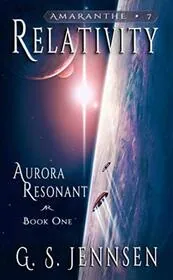
Relativity
by GS Jennsen
2016
Alex Solovy and Caleb Marano cross into Anaden space on a near-suicide mission to steal crucial intelligence. Back home, humanity prepares for war while new allies and old enemies make every move more dangerous.
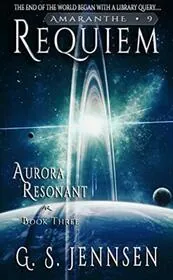
Requiem
by GS Jennsen
2017
What began with one strange signal has become a multiverse war over life, death, and who gets to shape the future. New wormhole breakthroughs give humanity a chance, but the Anaden Directorate will not go quietly.
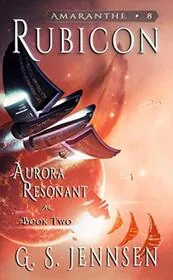
Rubicon
by GS Jennsen
2017
Humans join forces with long-rebellious Anadens in a bid to bring down an immortal empire. But shared origins do not mean shared trust, and the war for Amaranthe's future grows more complicated by the day.
Aurora Resonant books in chronological order
Series background & context
Aurora Resonant is the last Aurora trilogy, and it reads like a story finally stepping through a door it has been staring at for books. Humanity is no longer just trying to survive attacks at home. Now the fight reaches the ancient power behind so many earlier mysteries, the Anaden Directorate and the universe it rules.
Alex Solovy and Caleb Marano remain key players, but the cast gets bigger and stranger here. Humans are working alongside anarchs and other alien allies, and every alliance comes with history attached. The books make room for missions, espionage, and battlefield planning, but they also spend time on the emotional cost of carrying a war into a civilization older and more powerful than your own.
This is where the series goes wide.
The core tension across Relativity, Rubicon, and Requiem is not just how to beat a nearly immortal empire. It is how to resist becoming too much like it. Humanity learns that shared origins do not guarantee shared values, and every step forward raises questions about identity, freedom, and what life is for in the first place. Those ideas give the trilogy a more reflective edge, even when the plot is moving fast.
The setting matters a lot. Anaden space feels older, more layered, and less human in its assumptions. Jennsen uses that to shift the tone from frontier adventure toward something grander and stranger, without losing the banter, loyalty, and stubborn competence that hold the series together. There are still daring operations and close escapes, but there is also a real sense of entering a civilization built on very different rules.
The stakes are enormous, but the books keep them personal.
If you have come through the earlier Aurora books, this trilogy delivers the payoff part of the experience. It ties together long-running mysteries, raises the philosophical questions already lurking under the action, and pushes the characters toward decisions that matter on both intimate and civilizational levels. It is still space opera, absolutely, just with more multiverse strangeness and a sharper argument about power.


Edited by
Software engineer whose passion for tracking book recommendations from podcasts inspired the creation of MRB.
Lead investor at 3one4 Capital whose startup expertise and love for books helped shape MRB and its growth.
Comments
Did we miss something? Have feedback?
Help us improve this page by sharing your thoughts