
Ariadne Oliver Books in Order
Part ofAgatha Christie Books in OrderExplore the Ariadne Oliver books by Agatha Christie in order, with short summaries, series background, and a guide to the mystery writer's investigations.
Last updated:
As an Amazon Associate, we earn from qualifying purchases (at no extra cost to you).
Ariadne Oliver books in publication order
7 books
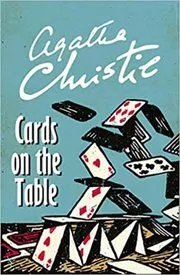
Cards on the Table
by Agatha Christie
1936
At a party hosted by the flamboyant Mr Shaitana, four suspected murderers play bridge while Hercule Poirot, Ariadne Oliver, Colonel Race, and Superintendent Battle look on. When Shaitana is killed, the detectives must determine which player left the table to commit the crime.
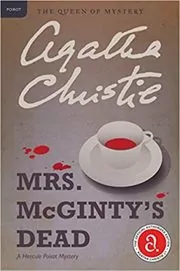
Mrs. McGinty's Dead
by Agatha Christie
1952
Mrs McGinty is killed and her small savings vanish, while her unemployed lodger is convicted of the crime. Asked to revisit the apparently simple village case, Hercule Poirot finds reasons to doubt the verdict—and places himself in danger.
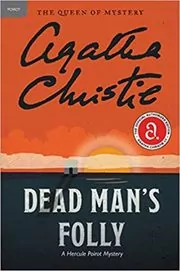
Dead Man's Folly
by Agatha Christie
1956
Crime novelist Ariadne Oliver is organizing a mock murder hunt for a Devon village fête when an uneasy feeling prompts her to summon Hercule Poirot. Her fears prove warranted when the staged game collides with real danger at the country house.
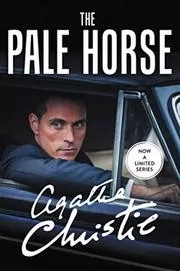
The Pale Horse
by Agatha Christie
1961
A murdered priest and a mysterious list of names lead Mark Easterbrook toward the Pale Horse inn. Rumours of witchcraft surround its inhabitants, and he must discover whether supernatural claims hide a more practical and dangerous explanation.
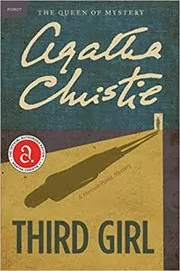
Third Girl
by Agatha Christie
1966
After a young woman tells Hercule Poirot she may have committed murder, she abruptly disappears. With Ariadne Oliver’s help, Poirot traces the rumors around the missing “third girl,” seeking proof of whether she is guilty, innocent, or being manipulated.
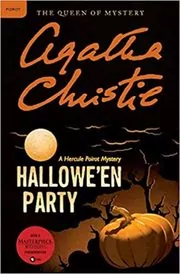
Hallowe'en Party
by Agatha Christie
1969
At a Hallowe'en party, thirteen-year-old Joyce claims she once saw a murder, then is found drowned in the apple-bobbing tub. Called in with novelist Ariadne Oliver, Hercule Poirot must decide whether Joyce was killed for telling the truth—and whether an earlier murder lies behind her death.
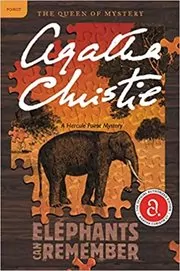
Elephants Can Remember
by Agatha Christie
1972
Ariadne Oliver’s goddaughter needs to know what happened when her parents were found shot at the foot of a cliff fifteen years earlier. With little physical evidence, Poirot revisits the case, gathering old recollections to decide whether the deaths were suicide, passion, or murder.
Series background & context
Ariadne Oliver writes detective novels for a living, but real crimes don't always behave like the ones she invents. Agatha Christie brings her into investigations as an observant, talkative presence who is willing to trust a strong feeling before she can explain it. Her ideas can be perceptive or mistaken, and that uncertainty gives her exchanges with Hercule Poirot much of their humour. These books follow her appearances rather than a separate detective agency or a single continuing case.
Writing about murder doesn't make her immune to its consequences.
Mrs Oliver has her own fictional sleuth, the Finnish detective Sven Hjerson, and she doesn't always enjoy the demands of keeping him alive on the page. Her impatience with the business of authorship gives Christie room to joke about readers, plots and the awkwardness of being identified with one's characters. That strand sits alongside the actual investigation. It adds a personal voice without making Mrs Oliver an infallible interpreter of either stories or people.
Her first novel appearance is in Cards on the Table. The gathering puts several investigators alongside people suspected of having got away with murder, then turns a bridge game into a new crime scene. Mrs Oliver's instinctive approach becomes one part of a comparison between ways of detecting. Poirot wants evidence arranged carefully; she is readier to offer a theory about someone's character. Their partnership works through that difference, with her attention to people opening possibilities that still have to be tested.
In Dead Man's Folly, the boundary between invented and real murder becomes especially uncomfortable. Mrs Oliver has been drawn into organising a murder game at a country house, but something about the arrangements troubles her enough to call Poirot. The setting matters because a social event has its own roles and expectations. People are supposed to follow a harmless script, yet that script can also hide intentions. Her unease gives the investigation a beginning before anyone has a complete account of the danger.
Later, Elephants Can Remember looks back at an old death involving the parents of Mrs Oliver's goddaughter. Memories and conversations become essential when physical evidence is limited. This gives her another kind of work to do: finding people who remember, listening to their versions and helping Poirot separate what was observed from what has been assumed. Her appearance in The Pale Horse also places her outside their usual partnership.
The tone combines a murder puzzle with affectionate comedy about the person trying to understand it.
Reading the appearances in publication order lets you follow Mrs Oliver's recurring presence, but each crime has its own cast and setting. Start with Cards on the Table for her first novel case, or choose Dead Man's Folly for a story that directly draws on her profession. The pleasure comes from watching a writer discover how much messier life can be than a carefully planned fictional murder.




Edited by
Software engineer whose passion for tracking book recommendations from podcasts inspired the creation of MRB.
Lead investor at 3one4 Capital whose startup expertise and love for books helped shape MRB and its growth.
Comments
Did we miss something? Have feedback?
Help us improve this page by sharing your thoughts