
Annie Jacobsen Books in Order
Find Annie Jacobsen books in order, with short summaries and guides to the author's series that help you choose where to start and what to read next.
Last updated:
As an Amazon Associate, we earn from qualifying purchases (at no extra cost to you).
Annie Jacobsen books in publication order
9 books
Terror in the Skies
by Annie Jacobsen
2005
After witnessing behavior she considered suspicious on a commercial flight, Annie Jacobsen investigates aviation security and government responses. She recounts the incident and her subsequent inquiries, arguing that vulnerabilities remain despite the measures introduced after September 11.
Area 51
by Annie Jacobsen
2011
Drawing on interviews with military personnel, scientists and others connected to Area 51, Jacobsen investigates the secret Nevada installation. Its concealed programs and Cold War history reveal how military secrecy encouraged the myths surrounding the base.
Operation Paperclip
by Annie Jacobsen
2014
Jacobsen investigates the secret American program that recruited Nazi scientists after World War II. Following their lives through government records and interviews, she examines the scientific gains and moral compromises made in the name of Cold War security.
The Pentagon's Brain
by Annie Jacobsen
2015
Jacobsen traces DARPA from its Cold War beginnings through decades of secret military research. Interviews and declassified records explore how its scientists, weapons programs and technological ambitions have shaped warfare and raised difficult questions about national security.
Phenomena
by Annie Jacobsen
2017
Through declassified documents and interviews, Jacobsen investigates American intelligence and military programs studying psychic abilities. Scientists, officials and participants describe experiments in remote viewing and other phenomena, revealing the lengths agencies pursued in their search for strategic advantage.
Surprise, Kill, Vanish
by Annie Jacobsen
2019
Jacobsen examines the CIA’s covert paramilitary operations through interviews with participants and declassified records. Accounts of sabotage, subversion and assassination reveal the people carrying out presidential directives and the moral and political tensions surrounding their missions.
First Platoon
by Annie Jacobsen
2021
Following American soldiers deployed to Afghanistan, Jacobsen connects their experiences to the Pentagon’s expanding biometric surveillance programs. Her investigation examines the collection of personal identifiers and the consequences of using data-driven systems to distinguish threats from civilians.
Nuclear War
by Annie Jacobsen
2024
Jacobsen follows a hypothetical nuclear attack and the rapid decisions it triggers, drawing on interviews with military and civilian experts. The scenario examines warning systems, retaliation plans and the possibility of global catastrophe unfolding within hours.
Biological War
by Annie Jacobsen
2026
Drawing on interviews with medical, military and government experts, Jacobsen constructs a scenario of biological catastrophe. A laboratory accident or deliberate attack leads to spreading infection, testing whether institutions and infrastructure can prevent the collapse of society.
Where to start with Annie Jacobsen
For military research history: The Pentagon's Brain
For postwar scientific recruitment: Operation Paperclip
For intelligence and unconventional research: Phenomena → Surprise, Kill, Vanish
For biometrics and surveillance: First Platoon
For catastrophe scenarios: Nuclear War → Biological War
Standalone Annie Jacobsen books



by Annie Jacobsen
2014The Secret Intelligence Program that Brought Nazi Scientists to America
by Annie Jacobsen
2015An Uncensored History of DARPA, America's Top-Secret Military Research Agency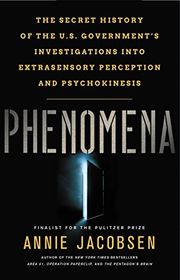
by Annie Jacobsen
2017The Secret History of the U.S. Government's Investigations into Extrasensory Perception and Psychokinesis
by Annie Jacobsen
2019The Secret History of CIA Paramilitary Armies, Operators, and Assassins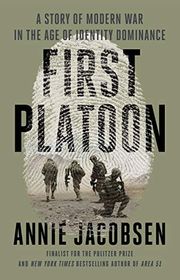


Author bio
Annie Jacobsen writes investigative nonfiction about military power, intelligence and the systems built in the name of national security. Her subjects range from secret research programs to surveillance technology and hypothetical catastrophe. The recurring interest is in decisions made beyond ordinary public view, and the people and institutions responsible for them.
Jacobsen graduated from Princeton University, where she captained the women's ice hockey team. She later worked as a contributing editor at the Los Angeles Times Magazine. Her books often combine documents with interviews, using individual experiences to approach institutions whose full operations are difficult to see.
The Pentagon's Brain was a Pulitzer Prize finalist in History in 2016.
That book examines DARPA, the American military research agency, and is a useful entry for readers interested in the relationship between technological ambition and government power. Operation Paperclip looks back to the recruitment of German scientists after the Second World War. Jacobsen follows their postwar careers while examining the moral compromises associated with bringing their expertise into American programs.
Phenomena turns toward government investigations of purported psychic abilities. Its subject is the research and the people involved: why agencies supported the work, who participated and how they explained what they were trying to do. It offers a different angle on the same broad question of how far national-security institutions will go in pursuit of an advantage.
The more recent books move toward surveillance and catastrophe.
First Platoon connects the experience of soldiers in Afghanistan with the military's development of biometric identification. The book brings questions about fingerprints, iris scans and databases into a story involving war and the interpretation of individual behavior. Its focus makes it a suitable starting point for readers interested in what identification technology can mean for the people being recorded.
Nuclear War uses a hypothetical attack to follow the rapid decisions and institutional responses that might follow. It is a constructed scenario informed by interviews, giving it a different structure from the historical investigations. Biological War takes a related approach to the possible consequences of a biological catastrophe, shifting attention toward infection and the institutions expected to contain it.
Jacobsen lives in Los Angeles with her husband and two sons. Her books can be read independently, so an entry point depends on the reader's question: the history of a research agency, the ethics of recruiting scientists, the reach of surveillance or the chain of decisions inside a worst-case scenario.

















Edited by
Software engineer whose passion for tracking book recommendations from podcasts inspired the creation of MRB.
Lead investor at 3one4 Capital whose startup expertise and love for books helped shape MRB and its growth.
Comments
Spotted a missing book, a wrong order or a mistake? Tell us and we'll fix this page.
We're a reading guide, not the author or publisher, so we can't send books or pass on messages.