
All Quiet on the Western Front/The Road Back Books in Order
Part ofErich Maria Remarque Books in OrderThis page lists the All Quiet on the Western Front and The Road Back books by Erich Maria Remarque, with order, summaries, and notes on their wartime arc.
Last updated:
As an Amazon Associate, we earn from qualifying purchases (at no extra cost to you).
All Quiet on the Western Front/The Road Back books in publication order
2 books
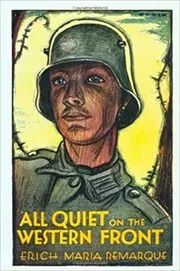
All Quiet on the Western Front
by Erich Maria Remarque
1929
Paul Bäumer and his classmates march into the First World War full of patriotic ideas and lose them almost at once. In the trenches, Remarque strips war of glory and shows its damage up close.
Recommended by
3 people Donald Trump recommended this book
Donald Trump
"One of the greatest books of all time." - Donald Trump
Donald Trump's recommendation of this book  Christopher Hitchens recommended this book
Christopher Hitchens
"I became consumed with the subject [of World War I] and got hold of [this book]." - Christopher Hitchens
Christopher Hitchens's recommendation of this book  Dan Carlin recommended this book
Dan Carlin
"The author is helping you to see what they all learned from this terrible conflict. " - Dan Carlin
Dan Carlin's recommendation of this book
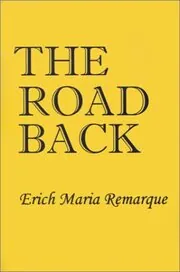
The Road Back
by Erich Maria Remarque
1931
After the First World War, Ernst and the few survivors from his company return home expecting peace and find only confusion. Jobs are scarce, politics are bitter, and the old life they imagined is gone.
All Quiet on the Western Front/The Road Back books in chronological order
Series background & context
These two books work best as companion novels. All Quiet on the Western Front follows Paul Bäumer, a young German soldier who enlists with his classmates and learns what trench warfare actually does to a body and a mind. The Road Back turns to the survivors after the armistice and asks a harder question: once the shooting stops, where are they supposed to go? Read together, they show the war and then the broken return from it.
All Quiet on the Western Front is set close to the mud, wire, shells, hospitals, and brief rest camps of the Western Front. Paul and his friends are not written as marching symbols of patriotism. They are frightened, hungry, exhausted young men aging too fast. Remarque pays as much attention to waiting, scavenging, and small routines as he does to battle. That is part of what makes the book hit so hard. War here is not glory. It is fatigue, luck, terror, and loss.
Friendship is what keeps the boys human.
Paul's bond with Kat, Kropp, Müller, and the others gives the novel its emotional center. They joke, share food, improvise, and look out for one another because almost everything else has been stripped away. Even when Paul goes home on leave, he finds that home no longer fits. The people around him still speak in borrowed phrases about duty and sacrifice, while he has learned a language of mud, wounds, and survival. That gap between soldiers and civilians matters just as much in the second book.
Then the war ends. The damage doesn't.
The Road Back leaves the trenches but not the wound. Ernst and the few men left from his company return to streets, classrooms, boarding houses, and families that feel smaller and colder than memory promised. They expect relief and find confusion instead. Work is uncertain. Politics are turning harsh. The old rules no longer make sense. The danger in this book is quieter than artillery fire, but it is everywhere: despair, aimlessness, resentment, and the sense that youth has already been spent.
The tone across both novels is plain, direct, and unsentimental, but never cold. These are antiwar books, yet they are also books about attachment, about the people a shattered generation tries to hold on to when almost everything else has collapsed. If you start with All Quiet on the Western Front and then move to The Road Back, you get Remarque's full point. War does not end neatly. It lingers in friendships, in silences, in bodies, and in the hard fact that peace can feel strange after catastrophe. The first novel was later adapted for film, but the deeper story lives in the way these two books speak to each other.







Edited by
Software engineer whose passion for tracking book recommendations from podcasts inspired the creation of MRB.
Lead investor at 3one4 Capital whose startup expertise and love for books helped shape MRB and its growth.
Comments
Did we miss something? Have feedback?
Help us improve this page by sharing your thoughts