
Alexander the Great Books in Order
Part ofMary Renault Books in OrderSee Mary Renault's Alexander the Great books in order, with quick summaries, reading guidance, and background on this sweeping trilogy of war and empire.
Last updated:
As an Amazon Associate, we earn from qualifying purchases (at no extra cost to you).
Alexander the Great books in publication order
3 books

Fire from Heaven
by Mary Renault
1969
This novel follows Alexander from boyhood to the moment he takes the throne, shaped by Philip, Olympias, Aristotle, and Hephaistion. It is both a coming-of-age story and a study of how power starts early.
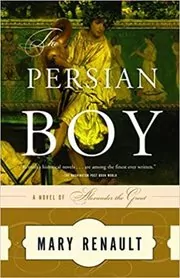
The Persian Boy
by Mary Renault
1972
Bagoas, a Persian youth sold into slavery after his father's murder, is swept into Alexander's court after the conquest of Persia. Through his eyes, the empire's glory and violence become deeply personal.
Recommended by
1 person Christopher Hitchens recommended this book
Christopher Hitchens
"[A] marvelous novel." - Christopher Hitchens
Christopher Hitchens's recommendation of this book

Funeral Games
by Mary Renault
1981
Alexander is dead, and his generals, relatives, and widows begin the brutal struggle over what he leaves behind. Instead of one conquering hero, Renault gives us a fractured empire full of ambition, plots, and aftermath.
Alexander the Great books in chronological order
Series background & context
Mary Renault's Alexander books, Fire from Heaven, The Persian Boy, and Funeral Games, form a historical trilogy that follows Alexander from youth to death and then into the wreckage he leaves behind. Read together, they feel much bigger than a standard life-of-a-conqueror sequence. These are novels about power, loyalty, grief, desire, and the strange pull one extraordinary person can have on everyone around him.
Fire from Heaven begins before the legend is fixed. Renault gives you the boy Alexander in Macedon, shaped by the brutal energy of Philip, the intensity of Olympias, military training, court intrigue, and his bond with Hephaistion. That early focus matters because the series never treats conquest as something that appears fully formed. It grows out of family pressure, education, religious feeling, ambition, and the habits of command learned young.
Then the point of view shifts.
The Persian Boy is told by Bagoas, a Persian court eunuch whose life is shattered long before he ever meets Alexander. That change of narrator gives the trilogy much of its force. Alexander is no longer simply the gifted prince at the center of his own rise, but a man watched from close range: magnetic, generous, reckless, impatient, and sometimes frightening. The world gets larger too, moving through conquered courts, military camps, long marches, ceremonies, and the uneasy meeting of Macedonian and Persian ways.
Funeral Games pushes outward once more. Alexander is dead, and the story becomes a struggle among generals, royal women, satraps, and claimants trying to control the empire he built. That makes the third book more political and more fragmented by design. Instead of one driving personality, you get competing ambitions, private bargains, revenge, fear, and improvisation. Renault is very good on that feeling of a world breaking apart while everyone insists they can still hold it together.
It gets bigger as it gets sadder.
What links all three books is Renault's ability to make large history feel personal. Battles matter, but so do friendship, eros, wounded pride, ritual, and the small choices that harden into policy. The tone is serious and immersive without feeling dusty. If you want historical fiction that treats the ancient world as vivid, unfamiliar, and emotionally real, this trilogy is one of the clearest places to start. Read it in order, because each book changes your sense of Alexander by changing who gets to tell the story.














Edited by
Software engineer whose passion for tracking book recommendations from podcasts inspired the creation of MRB.
Lead investor at 3one4 Capital whose startup expertise and love for books helped shape MRB and its growth.
Comments
Did we miss something? Have feedback?
Help us improve this page by sharing your thoughts