
Aja Gabel Books in Order
Browse Aja Gabel's books in order, with short summaries, where to start tips, and a clear guide to her novels, themes, and writing background.
Last updated:
As an Amazon Associate, we earn from qualifying purchases (at no extra cost to you).
Aja Gabel books in publication order
2 books
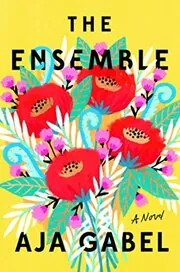
The Ensemble
by Aja Gabel
2018
Four young musicians form the Van Ness Quartet and spend years balancing ambition, intimacy, rivalry, and love. It's an emotionally close novel about the way art can bind people together, and slowly pull them apart.
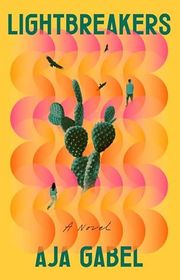
Lightbreakers
by Aja Gabel
2025
Maya and Noah build a marriage around curiosity, art, and science until a secret time travel project reopens old grief. As both turn toward the past, love and memory start to pull their lives off course.
Where to start with Aja Gabel
If you want to read in publication order: The Ensemble → Lightbreakers
If you want music, ambition, and intense friendships: The Ensemble → Lightbreakers
If you want grief, marriage, and a speculative twist: Lightbreakers → The Ensemble
Standalone Aja Gabel books
Author bio
Aja Gabel grew up in San Francisco, in a family where art was part of ordinary life. In essays and interviews, she has written about having a Japanese mother and a white father, weekends at a Japanese Buddhist temple, and a childhood shaped by music, theater, and the city's changing neighborhoods. That mix of family history, discipline, and curiosity runs through much of her work.
Music came first.
Gabel started on violin at five and switched to cello at ten. She has said she played seriously for about twenty-five years, especially chamber music, and that the friendships formed across a music stand stayed with her long after childhood. She was one of five children, and while everyone in the family was pushed toward an instrument, the cello was the one that really stuck.
For a long time, she thought music might be her life. By the end of college, though, it had become clear that she was not heading toward the conservatory track she had once imagined. She kept playing through her twenties, but when she moved to Provincetown to begin writing The Ensemble, she left the cello behind for the first time. She has described that choice as opening up space in her brain for a novel.
Writing had already become serious work. Gabel studied at Wesleyan University and the University of Virginia, then earned a PhD in Literature and Creative Writing from the University of Houston. She has also taught writing at several schools, including the University of Virginia and the University of Houston, and worked as an editor for literary magazines. Before her novels reached readers, she had already spent years inside classrooms, workshops, and manuscripts.
Her debut novel, The Ensemble, follows four classical musicians in the Van Ness Quartet over many years of work, love, failure, loyalty, and resentment. Readers who like close-knit casts usually connect with it right away. So do readers who enjoy novels about art that are really about friendship, ambition, and the strange way a shared project can turn into a family.
Then came Lightbreakers.
With Lightbreakers, Gabel moved into different territory without losing the intimate scale of her first book. The novel brings together an artist, a physicist, a marriage under strain, and a dangerous experiment that offers a path back into the past. Readers who like literary fiction with a speculative edge tend to find a lot to hold onto there, especially its interest in grief, memory, and the tug between art and science.
Gabel's work outside the novels helps fill in the picture. Her prose has appeared in magazines and newspapers, and her short story Little Fish was adapted into a feature film. She has also written for television. Across fiction and nonfiction, she returns to a few familiar concerns: chosen family, loss, bodies under pressure, old attachments that refuse to stay in the past, and people trying to build a life around art.
She now lives and writes in Los Angeles. Even after stepping away from music as a career, she has said the cello still pulls at her, and that returning to Bach can be both humbling and creatively useful. That feels close to the spirit of her books. They are interested in what happens after the first dream changes shape, and in the life a person builds from what remains.
Edited by
Software engineer whose passion for tracking book recommendations from podcasts inspired the creation of MRB.
Lead investor at 3one4 Capital whose startup expertise and love for books helped shape MRB and its growth.
Comments
Did we miss something? Have feedback?
Help us improve this page by sharing your thoughts