
Afia Atakora Books in Order
Browse Afia Atakora books in order, with a quick guide to Conjure Women, a short author bio, book summary, and easy help on where to start.
Last updated: July 10, 2026
As an Amazon Associate, we earn from qualifying purchases (at no extra cost to you).
Afia Atakora books in publication order
1 book
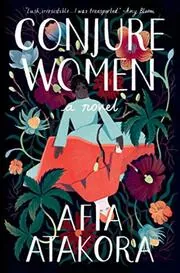
Conjure Women
by Afia Atakora
2020
On a Southern plantation before and after the Civil War, Rue inherits her mother's healing work as fear and superstition spread through the community. A mysterious child, old secrets, and the fragile promise of freedom drive this haunting historical novel.
Where to start with Afia Atakora
If you want her best-known work first: Conjure Women
If you like Civil War and Reconstruction era fiction: Conjure Women
If you want folklore, healing, and layered family drama: Conjure Women
Standalone Afia Atakora books
Author bio
Afia Atakora was born in the United Kingdom and raised in New Jersey, and she has said that New York City helped raise her too. She is a Ghanaian American writer and a dual citizen of the UK and the US, with family roots in Ghana. That layered background matters in her work. Her fiction pays close attention to place, memory, and the feeling of standing with one foot in more than one world.
That in-between feeling shows up all through her fiction.
Atakora studied at New York University and later earned an MFA in fiction from Columbia University, where she received the De Alba Fellowship. Her fiction was nominated for a Pushcart Prize, and she was a finalist for the Hurston/Wright Award for College Writers. Conjure Women began at Columbia in 2014 as her thesis novel, then kept growing through research, revision, and a lot of patience.
The book came quickly at first. Atakora has said the earliest draft arrived in a nine-month rush, which feels fitting for a novel so bound up with childbirth, midwifery, and women's bodies. She also wanted the prose to carry a slightly hazy, remembered quality, shaped by oral storytelling traditions across the African diaspora and by the idea that history is always being retold, never perfectly pinned down.
Healing sits at the center of her imagination.
That part feels personal. As a child, Atakora spent time watching her mother, a home health care worker, care for sick and elderly people. Those memories helped shape the practical, bodily texture of Conjure Women, where care is never abstract and survival often comes down to what one person can do for another with her hands, her judgment, and a little faith. For the novel, Atakora also drew on slave narratives, diaries, autobiographies, medical history, conversations with nurses and midwives, and the folklore of plants and root medicine. She has also spoken about visiting a slave castle on the coast of West Africa, an experience that deepened the book's sense of historical shadow.
She has said she wanted to move beyond the broad, simplified images people often carry about slavery in America. Instead of treating history as a backdrop, she writes about individual people living through uncertain days and impossible choices. That drew her toward Reconstruction, a period that is often skimmed over even though it was full of fear, backlash, hope, rumor, and unfinished freedom. While working on the novel, she kept seeing links between the nineteenth century and the present, especially in arguments about race, memory, and power.
Most readers know Atakora best for Conjure Women, and it is easy to see why. The novel follows Rue, her mother Miss May Belle, and Varina, the plantation owner's daughter, across the years before and after the Civil War. It moves back and forth in time, mixing folk healing, superstition, secrecy, and the daily labor of staying alive. Readers tend to remember the atmosphere, the morally complicated women, and the way Atakora treats history not as a closed chapter but as something still pressing on the living.
The book made a real mark. Conjure Women won the Society of American Historians Prize, earned Atakora a literary fellowship from the Lannan Foundation, and was named one of the year's best books in several major venues. She now divides her time between New York City and New Jersey, where she lives with her husband and two daughters. Even in a small body of work, she has already shown a clear interest in the long afterlife of history, and in the ordinary, difficult work of care.







Edited by
Software engineer whose passion for tracking book recommendations from podcasts inspired the creation of MRB.
Lead investor at 3one4 Capital whose startup expertise and love for books helped shaped MRB and its growth.
Comments
Did we miss something? Have feedback?
Help us improve this page by sharing your thoughts