
12 Best Robert Harris Books
The best Robert Harris books, ranked by how many expert sources recommend each one, with notes on historical thrillers, political intrigue, and where to start.
Our take
Robert Harris writes thrillers about power: who holds it, who challenges it, and what institutions do to protect themselves. His settings range from ancient Rome to twentieth-century Europe and contemporary political life. Some novels reconstruct real crises, while Fatherland imagines the consequences of a Nazi victory. The suspense often comes from documents, negotiations, and investigations rather than sustained action.
The Cicero trilogy follows Roman politics through Imperium, Lustrum, and Dictator, in that order. For a standalone set in the ancient world, Pompeii combines an engineer’s investigation with a looming disaster. An Officer and a Spy explores the Dreyfus affair through a military investigator’s discoveries, while Conclave confines a struggle for leadership to a papal election. The Ghost brings the same interest in concealed power into a modern political conspiracy. Start with Fatherland for an unsettling detective thriller, or Imperium if you want a longer historical sequence.
12 books · 8 sources · Last updated
As an Amazon Associate, we earn from qualifying purchases (at no extra cost to you).
Reading Robert Harris in order? See all Robert Harris books in order
How to choose from this list
Skip to the full rankingIf you want Roman politics: Imperium → Lustrum → Dictator
If you want a focused institutional mystery: Conclave → An Officer and a Spy
If you’re interested in wartime decisions: Enigma → Munich
If you want a historical manhunt: Act of Oblivion
If you like private lives and public power: Precipice
The 12 books, ranked
Ranked by how many expert sources name each book. Ties go to the book more people recommend.

For readers who want historical suspense centered on evidence, conscience, and institutional resistance. Its investigation gives the Dreyfus affair a focused moral force, though the detailed military procedures and entrenched prejudice make for demanding reading.
What it's about
An Officer and a Spy retells the Dreyfus affair through Colonel Georges Picquart, newly promoted to French military intelligence. When he realises the evidence against Alfred Dreyfus was faked and the real spy is still active, his determination to speak out puts him in danger.

For readers who like institutional intrigue in a confined setting. The papal election turns procedure and conversation into suspense more tightly than the broad historical novels, though its late revelations may feel too deliberately engineered.
What it's about
Conclave is set in the tense days after a pope’s death, as cardinals are sealed inside the Vatican to choose his successor. Dean Jacopo Lomeli must manage rival factions, buried scandals and a late‑arriving outsider as each ballot reshapes the race for the papacy.

For readers who want a detective story built around a disturbing historical possibility. The imagined Nazi victory makes its political mystery more unsettling than a conventional period thriller, though the bleak setting offers little comfort.
What it's about
Set in a victorious Nazi Germany in 1964, Fatherland follows detective Xavier March as a routine murder inquiry draws him toward a buried secret about the regime’s past. As Hitler’s 75th birthday and a US state visit loom, the investigation turns him from hunter into hunted.

For readers drawn to engineering, daily Roman life, and a disaster unfolding around them. The aqueduct investigation gives this standalone a more practical focus than the Cicero books, though the looming eruption makes its direction predictable.
What it's about
Set in the last days before Vesuvius erupts, Pompeii centers on young engineer Marcus Attilius, tasked with fixing the great Aqua Augusta aqueduct. Investigating a mysterious breakdown, he uncovers corruption, seismic omens and a looming disaster that threatens the towns depending on his water.
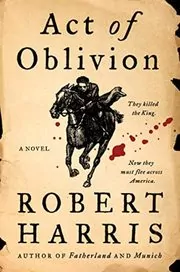
For readers who want a sustained manhunt with questions of loyalty and political revenge. The movement between Restoration England and colonial America gives it greater geographical breadth than Conclave, though the lengthy pursuit occasionally loses urgency.
What it's about
Act of Oblivion begins after the restoration of Charles II, when parliament declares the king’s killers traitors. Regicides Edward Whalley and William Goffe flee to Puritan New England, only to be hunted across oceans and forests by relentless royalist official Richard Nayler.
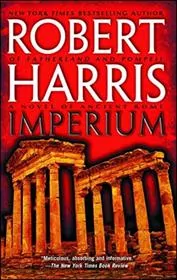
For readers who want Roman politics explained through an ambitious outsider’s career. Tiro’s narration makes legal contests and maneuvering accessible, though the speeches and political detail demand more attention than Harris’s shorter standalone thrillers.
What it's about
Imperium opens the Cicero trilogy, with his secretary Tiro narrating the rise of an ambitious young lawyer from provincial outsider to Roman power-broker. Courtroom showdowns, backroom deals and dangerous enemies build toward Cicero’s first bid for real power in the brutal politics of the Republic.
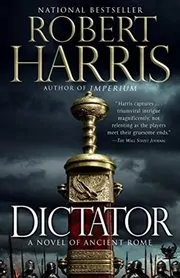
For readers ready to complete the Cicero trilogy. Its long view of political defeat and republican collapse gives earlier ambitions greater weight, though the historical sweep and established relationships make it a poor starting point.
What it's about
Dictator concludes the Cicero trilogy, following his final fifteen years through exile, uneasy return and the rise of Caesar and then Octavian. Tiro’s narrative shows a gifted orator trying to save a collapsing Republic, even as shifting alliances bring Cicero closer to his own destruction.

For readers who prefer contemporary political suspicion to historical reconstruction. The ghostwriter’s outsider perspective gives the conspiracy an immediate, compact shape, though its recognizable British political parallels can feel pointed rather than subtle.
What it's about
In The Ghost, a nameless writer is hired to finish the memoirs of a former British prime minister hiding on a wintry American island. As he rewrites the book and probes his predecessor’s death, he uncovers uneasy links between his subject, the CIA and past wars.

For readers interested in codebreaking combined with a personal mystery. Bletchley Park’s technical work gives the espionage a distinctive setting, though the cryptographic explanations can interrupt the momentum for readers seeking a straightforward chase.
What it's about
In wartime Britain, brilliant but fragile codebreaker Tom Jericho is summoned back to Bletchley Park when the German U‑boats change their Enigma settings. As he races to crack the new cipher, Jericho also searches for a missing former lover who may be a traitor.

For readers continuing Cicero’s story who enjoy conspiracy and institutional pressure. The focus on his years in high office deepens the political tensions of Imperium, though the crowded cast is harder to follow without that introduction.
What it's about
Conspirata (published elsewhere as Lustrum) continues Tiro’s account of Cicero, now at the peak of his career as consul of Rome. Facing the Catiline conspiracy, scheming rivals and restless mobs, Cicero struggles to defend the Republic while every decision makes him new, implacable enemies.

For readers curious about diplomacy under pressure before the Second World War. The negotiation scenes give familiar history immediacy, though the fictional espionage strand must work within an outcome many readers already know.
What it's about
Munich unfolds over four days in September 1938, when Europe teeters on the edge of war. British official Hugh Legat and German diplomat Paul Hartmann—once friends at Oxford, now on opposite sides—reunite at the Munich conference, carrying documents that could expose Hitler and change events.

Precipice
For readers interested in private obsession colliding with public responsibility. The use of Asquith’s correspondence makes the political intimacy unusually concrete, though its emphasis on letters and relationships offers less action than the wartime thrillers.
What it's about
Precipice is set in the summer of 1914, as Britain edges toward war and Prime Minister H. H. Asquith pours his private anxieties into letters to young socialite Venetia Stanley. When secret documents start leaking, a Scotland Yard detective’s inquiry turns their affair into a security crisis.
Sources
- 1
Robert Harris
fantasticfiction.com
- 2
Books by Robert Harris (Author of Conclave)
goodreads.com
- 3
Books by Books by Robert Harris - Five Books Expert Recommendations
fivebooks.com
- 4
Where to start with Robert Harris
penguin.co.uk
- 5
Robert Harris Books & Series - Complete Guide
historicalshelf.com
- 6
Robert Harris | Kirkus Reviews
kirkusreviews.com
- 7
Robert Harris books
reddit.com
- 8
Imperium by Robert Harris. What a ride!
reddit.com





Edited by
Software engineer whose passion for tracking book recommendations from podcasts inspired the creation of MRB.
Lead investor at 3one4 Capital whose startup expertise and love for books helped shape MRB and its growth.
Comments
Spotted a missing book, a wrong order or a mistake? Tell us and we'll fix this page.
We're a reading guide, not the author or publisher, so we can't send books or pass on messages.