
9 Best Mafia Books
The best Mafia books, ranked by how many expert sources recommend each one, with notes on histories, undercover accounts, reporting, and crime fiction.
Our take
Books about the Mafia can explain how criminal organizations operate, reveal what daily involvement feels like, or explore the myths that surround power and loyalty. Italian histories, American family chronicles, undercover accounts, and novels offer different kinds of evidence and experience. Keeping those forms distinct helps you choose between understanding institutions and following an individual story.
Five Families gives a broad account of New York’s organizations, while Cosa Nostra turns toward Sicilian history. Donnie Brasco follows an undercover investigation, and Wiseguy approaches criminal life through an associate who became an informant. Gomorrah examines the Camorra’s commercial reach, while Midnight in Sicily places crime within a wider cultural portrait. For fiction, The Godfather offers a large family saga and The Day of the Owl a shorter examination of silence and political pressure. Start with Five Families for American history or The Day of the Owl if you want a compact fictional introduction.
9 books · 7 sources · Last updated
As an Amazon Associate, we earn from qualifying purchases (at no extra cost to you).
How to choose from this list
Skip to the full rankingIf you want American Mafia history: Five Families → Wiseguy
If you want Sicilian context: Cosa Nostra → Midnight in Sicily
If you want investigative perspectives: Donnie Brasco → Gomorrah
If you prefer crime fiction: The Day of the Owl → The Godfather
If you want Las Vegas operations: Casino
The 9 books, ranked
Ranked by how many expert sources name each book. Ties go to the book more people recommend.

Five Families
The Rise, Decline, and Resurgence of America's Most Powerful Mafia Empires
For readers who want a broad history of the New York Mafia rather than one boss’s life. Its long view connects families and investigations, though the extensive cast and detail require more commitment than a single narrative.
What it's about
Selwyn Raab traces the history of New York's five Mafia families, from their rise to the investigations that weakened them and their subsequent adaptation. Reporting on bosses, criminal enterprises, and law enforcement reveals how these organizations accumulated and retained power.
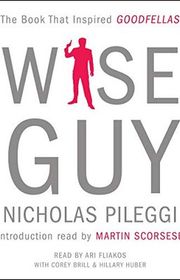
Wiseguy
For readers who want an account of everyday criminal life at street level. Its reliance on Henry Hill’s experiences gives the narrative immediacy, though an informant’s recollections need reading with attention to self-interest and perspective.
What it's about
Nicholas Pileggi reconstructs the life of Henry Hill, a New York Mafia associate who became an informant. Interviews and reporting follow his criminal work, relationships, and eventual cooperation with authorities, providing the basis for Goodfellas.
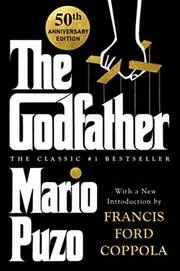
For readers who want a family saga that shaped the popular image of the American Mafia. Its intimate loyalties give the crime story emotional force, though the fictional perspective can make criminal power seem more orderly than reality.
What it's about
Vito Corleone rules a New York crime family built on favors, loyalty, and fear, but when an ambitious rival moves on him, his youngest son Michael is forced to step in, setting off a dark transformation and a brutal struggle for power.
Also recommended by
4 people LeBron James recommended this book
LeBron James
LeBron James was seen reading this book.
LeBron James's recommendation of this book  Tim Draper recommended this book
Tim Draper
"My Mom suggested I read it, and my teacher didn’t approve." - Tim Draper
Tim Draper's recommendation of this book  Charles Koch recommended this book
Charles Koch
Charles Koch recommended this book on his website.
Charles Koch's recommendation of this book  David Friedberg recommended this book
David Friedberg
"Very graphic and interesting. But if you've seen the movie, I don't think you get much more from [this book]." - David Friedberg
David Friedberg's recommendation of this book

For readers interested in infiltration and the daily work of earning criminal trust. Its undercover viewpoint provides a different perspective from insider memoirs, though the account remains shaped by the agent’s experience and investigative role.
What it's about
FBI agent Joseph Pistone recounts the years he spent infiltrating the Mafia as jewel thief Donnie Brasco. His account follows the relationships, criminal operations, and constant danger that accompanied earning mobsters' trust while gathering evidence against them.
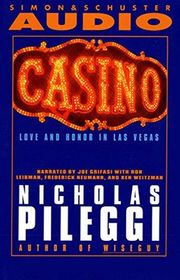
Casino: Love and Honor in Las Vegas
For readers interested in how criminal money, legitimate business, and personal loyalties intersected in Las Vegas. Its concentrated account offers a different setting from New York histories, though the central personalities dominate the broader institutional picture.
What it's about
Nicholas Pileggi examines Mafia influence in Las Vegas through the lives of Frank Rosenthal and Tony Spilotro. Reporting connects casino operations, relationships, violence, and conflicts with authorities during a period of organized crime’s involvement in the city.

Gomorrah
A Personal Journey into the Violent International Empire of Naples' Organized Crime System
For readers who want organized crime examined through business networks and ordinary life in southern Italy. Its reporting broadens the view beyond individual bosses, though the shifting structure is less straightforward than a chronological history.
What it's about
Roberto Saviano investigates the Camorra's reach through Naples and beyond, connecting organized crime to construction, fashion, drugs, and waste disposal. Firsthand encounters and reporting expose the violence and commercial networks behind an international criminal economy.
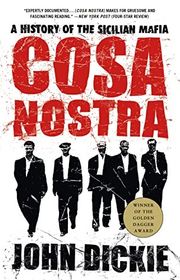
Cosa Nostra: A History of the Sicilian Mafia
For readers who want a historical explanation of the Sicilian Mafia rather than an American family chronicle. Its attention to origins and political connections challenges familiar myths, though names and institutional detail demand sustained concentration.
What it's about
John Dickie traces the Sicilian Mafia from its nineteenth-century emergence through later violence, political influence, and opposition. The history examines how criminal authority developed and endured, drawing connections between local power and wider Italian society.

For readers who want Mafia influence placed within Sicily’s wider culture and politics. Its mixture of travel, food, art, and history gives the subject texture, though the digressive structure offers less concentrated crime reporting.
What it's about
Peter Robb explores Sicily through its food, art, literature, and political history, drawing on years spent in southern Italy. His portrait of the island's cultural riches also examines Mafia violence, corruption, and their influence on everyday life.

The Day of the Owl
For readers who prefer a short novel that examines how power obstructs an investigation. Its restraint and attention to public silence contrast with the larger family sagas, though the mystery is secondary to the political critique.
What it's about
A killing near a Sicilian bus stop draws Captain Bellodi into an investigation obstructed by silence and powerful interests. Leonardo Sciascia's short novel uses the pursuit of a murderer to explore Mafia influence and the difficulty of uncovering the truth.
Sources
- 1
Leave the Gun, Take the Reading List
crimereads.com
- 2
Best Mafia Books of All Time
nationalcrimesyndicate.com
- 3
Best Mafia Books
goodreads.com
- 4
r/Mafia Book Recommendations 2025
reddit.com
- 5
What’s your top 5 mob books?
reddit.com
- 6
The top 10 books about the mafia
theguardian.com
- 7
Best Gangster Books: Mafia and Gangland Fact and Fiction
lovereading.co.uk








Edited by
Software engineer whose passion for tracking book recommendations from podcasts inspired the creation of MRB.
Lead investor at 3one4 Capital whose startup expertise and love for books helped shape MRB and its growth.
Comments
Spotted a missing book, a wrong order or a mistake? Tell us and we'll fix this page.
We're a reading guide, not the author or publisher, so we can't send books or pass on messages.