
12 Best Cosmic Horror Books
The best cosmic horror books, ranked by how many expert sources recommend each one, with notes on who each suits, from classic tales to modern nightmares.
Our take
Cosmic horror makes human understanding feel small. A discovery, place, or encounter reveals that familiar explanations cannot contain what is happening. Some stories turn that idea into strange landscapes and ancient forces; others locate the threat inside grief, memory, or ordinary social life.
The older selections introduce different parts of the tradition. Shadows of Carcosa gathers several writers, while At the Mountains of Madness builds dread through an expedition and its discoveries. Modern authors take different routes: The Fisherman gives the impossible an emotional center, and The Ballad of Black Tom challenges the social assumptions behind earlier horror. Ligotti's stories lean toward philosophical despair, while Barron's fiction often puts apparently capable people in situations they cannot master. What the Hell Did I Just Read adds comedy and series continuity to the mix.
Start with The Ballad of Black Tom for a short contemporary work, or The Fisherman for a slower novel rooted in loss.
12 books · 8 sources · Last updated
As an Amazon Associate, we earn from qualifying purchases (at no extra cost to you).
How to choose from this list
Skip to the full rankingIf you want a short modern introduction: The Ballad of Black Tom
If you want grief and growing dread: The Fisherman
If you're exploring the older tradition: Shadows of Carcosa → At the Mountains of Madness
If you prefer unsettling short fiction: The Imago Sequence and Other Stories → Songs of a Dead Dreamer and Grimscribe
If you want strange landscapes: Annihilation
If you're drawn to slow, layered uncertainty: The Croning
The 12 books, ranked
Ranked by how many expert sources name each book. Ties go to the book more people recommend.

The Ballad of Black Tom
For readers who want a short modern response to Lovecraft, LaValle connects cosmic horror with racism and social power. Its concentrated perspective makes an effective entry, though familiarity with the original tradition adds another layer to the experience.
What it's about
In Jazz Age New York, hustler Charles Thomas Tester makes a living running small jobs until one delivery pulls him toward occult power. LaValle turns cosmic horror into a sharp story about survival, rage, and what the city asks of Black men.

The Croning
For readers who want creeping uncertainty across a long life, Barron makes familiar relationships feel increasingly unstable. The gradual accumulation of dread rewards patience, though shifting periods and partial explanations can leave readers deliberately disoriented.
What it's about
Nearly eighty, geologist Donald Miller begins confronting disturbing gaps and revelations in his seemingly fortunate life. Secrets surrounding his wife and grown children lead him toward ancient cults and the terrifying beings lurking beyond ordinary existence.

The Imago Sequence and Other Stories
For readers who like tough protagonists discovering how little control they have, Barron combines crime-fiction energy with cosmic menace. The linked atmosphere rewards attention, though dense prose and deliberately incomplete explanations make it a challenging introduction.
What it's about
Nine tales pit spies, detectives, bounty hunters, and other vulnerable tough men against cosmic horrors. Hidden hive minds, distorted evolution, and encroaching chaos undermine ordinary reality, exposing human fragility within an indifferent and predatory universe.

For readers who want cosmic unease through ecology and perception rather than familiar monsters, VanderMeer offers a compact expedition story. Its controlled uncertainty encourages close reading, though the first volume deliberately leaves substantial questions unresolved.
What it's about
Four women— a biologist, anthropologist, surveyor, and psychologist—enter Area X, a quarantined coastal zone where nature has gone disturbingly right and wrong. Through the biologist’s journal, the novel becomes a hypnotic chronicle of secrecy, transformation, and an expedition that cannot stay intact.
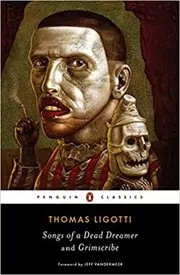
Songs of a Dead Dreamer and Grimscribe
For readers drawn to philosophical dread and disturbing language, Ligotti offers sustained unease across two collections. The dreamlike settings and bleak outlook distinguish these stories, though the ornate prose and relentless pessimism can feel oppressive.
What it's about
This volume brings together Thomas Ligotti's first two horror collections. Stories set in decaying cities and unsettling dreamscapes bend ordinary reality, exploring cosmic dread, human insignificance, and existential unease through ornate prose and moments of clinical detachment.

The Fisherman
For readers who want cosmic dread grounded in recognizable grief, Langan gives the impossible an emotional foundation. The nested storytelling adds a distinctive rhythm, though a long historical detour delays the contemporary narrative's progress.
What it's about
Widowers Abe and Dan find comfort in fishing the waters of upstate New York. A trip to the rumored Dutchman's Creek draws them into an old tale of loss, dark bargains, and something waiting beneath the water.

At the Mountains of Madness
For readers who enjoy discovery, ancient history, and hostile landscapes, Lovecraft gives cosmic horror an expedition structure. Its archaeological scale is distinctive, though lengthy exposition and dated racial ideas make it less approachable than many modern alternatives.
What it's about
An Antarctic expedition discovers ancient life forms and ruins beyond a towering mountain range. Geologist William Dyer recounts the investigation as a warning, as evidence of an unfamiliar civilization challenges the explorers' understanding of Earth's history.

Cthulhu's Reign
For readers already familiar with the Cthulhu mythos who want variations on its aftermath, this anthology offers multiple approaches. The shared premise gives the collection focus, though knowing the tradition helps and individual stories vary in tone.
What it's about
Darrell Schweitzer edits fifteen original stories set after Lovecraft's Great Old Ones return and transform the world. Contributors imagine humanity's survival, resistance, and altered existence under cosmic powers whose arrival has already brought the feared catastrophe.

Shadows of Carcosa
Tales of Cosmic Horror by Lovecraft, Chambers, Machen, Poe, and Other Masters of the Weird
For readers curious about the roots of weird fiction, this anthology offers several voices in one volume. The variety helps identify authors to explore, though historical language and uneven story styles make the experience less consistent than a single-author collection.
What it's about
Twelve stories by different authors explore uncanny landscapes and encounters with unexplained forces. Lovecraft's The Colour Out of Space appears alongside tales by Poe, Bierce, Chambers and others, ranging from Carcosa to New England.

For readers who enjoy absurd humor alongside impossible threats, Wong provides a deliberately chaotic alternative to solemn cosmic dread. The comic voice is distinctive, though this third series installment is a less straightforward entry point than a standalone novel.
What it's about
A missing-child case pulls Dave, John, and Amy into a knot of shape-shifters, false identities, and realities that refuse to line up. The deeper they dig, the less they can trust what they are seeing.

White is for Witching
For readers who enjoy Gothic fiction with shifting perspectives, Oyeyemi makes place and language part of the disturbance. Its treatment of belonging gives the horror social weight, though the fragmented telling resists straightforward explanations and conventional cosmic-horror expectations.
What it's about
After her mother's death, Miranda Silver sickens inside the family’s haunted Dover bed-and-breakfast, where grief, hunger, and hostility toward outsiders seep into the walls. A gothic novel told through shifting voices, including the house itself.

The Call Of Cthulhu And Other Stories
For readers who want to encounter Lovecraft's foundational vision directly, the title story offers a concentrated introduction to human insignificance. Its influence makes it useful background, though the older prose and racist assumptions require a critical reading.
What it's about
Investigating papers left by a dead relative, a narrator links disturbing dreams, an unusual sculpture and reports of a secret cult. The title story joins other tales in this collection of threats beyond human understanding.
Sources
- 1
The Best Cosmic Horror Books - Five Books Expert Recommendations
fivebooks.com
- 2
The Best Cosmic Horror Books - Puzzle Box Horror
puzzleboxhorror.com
- 3
7 Most Chilling Cosmic Horror Books To Keep You Up At Night
bookdeal.com
- 4
Cosmic Horror Books
goodreads.com
- 5
Cosmic horror recommendations?
reddit.com
- 6
Best Supernatural and Cosmic Horror Books in 2026: 10 That Make the Universe Feel Threatening
skriuwer.com
- 7
Skin-Crawling Cosmic Horror Books
theportalist.com
- 8
So You Want to Read Cosmic Horror: Here’s Where to Start | Penguin Random House
penguinrandomhouse.com








Edited by
Software engineer whose passion for tracking book recommendations from podcasts inspired the creation of MRB.
Lead investor at 3one4 Capital whose startup expertise and love for books helped shape MRB and its growth.
Comments
Did we miss something? Have feedback?
Help us improve this page by sharing your thoughts